

Does cultivated meat taste like the real thing? That’s the big question for many UK consumers. While cultivated meat is grown from animal cells and aims to replicate the flavour and texture of conventional meat, it’s not quite there yet. Current products show promise, especially for minced dishes like burgers and meatballs, but they often lack the complexity, juiciness, and marbling of traditional cuts. On the other hand, plant-based alternatives, while improving, still struggle with texture and flavour depth. Here’s a quick breakdown:
- Conventional Meat: Known for its rich umami flavour, natural marbling, and fibrous texture, but quality can vary.
- Cultivated Meat: Customisable during production to improve taste and texture, but early versions can be less juicy and flavourful.
- Plant-Based Alternatives: Best in seasoned dishes, but often fall short on texture, with some products described as rubbery or mushy.
What’s next? Cultivated meat producers are working on improving fat integration, flavour profiles, and texture to better meet British preferences, especially for iconic dishes like Sunday roasts and full English breakfasts. While it’s not perfect yet, the potential for cultivated meat to rival conventional options is growing. Platforms like Cultivated Meat Shop help consumers stay informed and compare options.
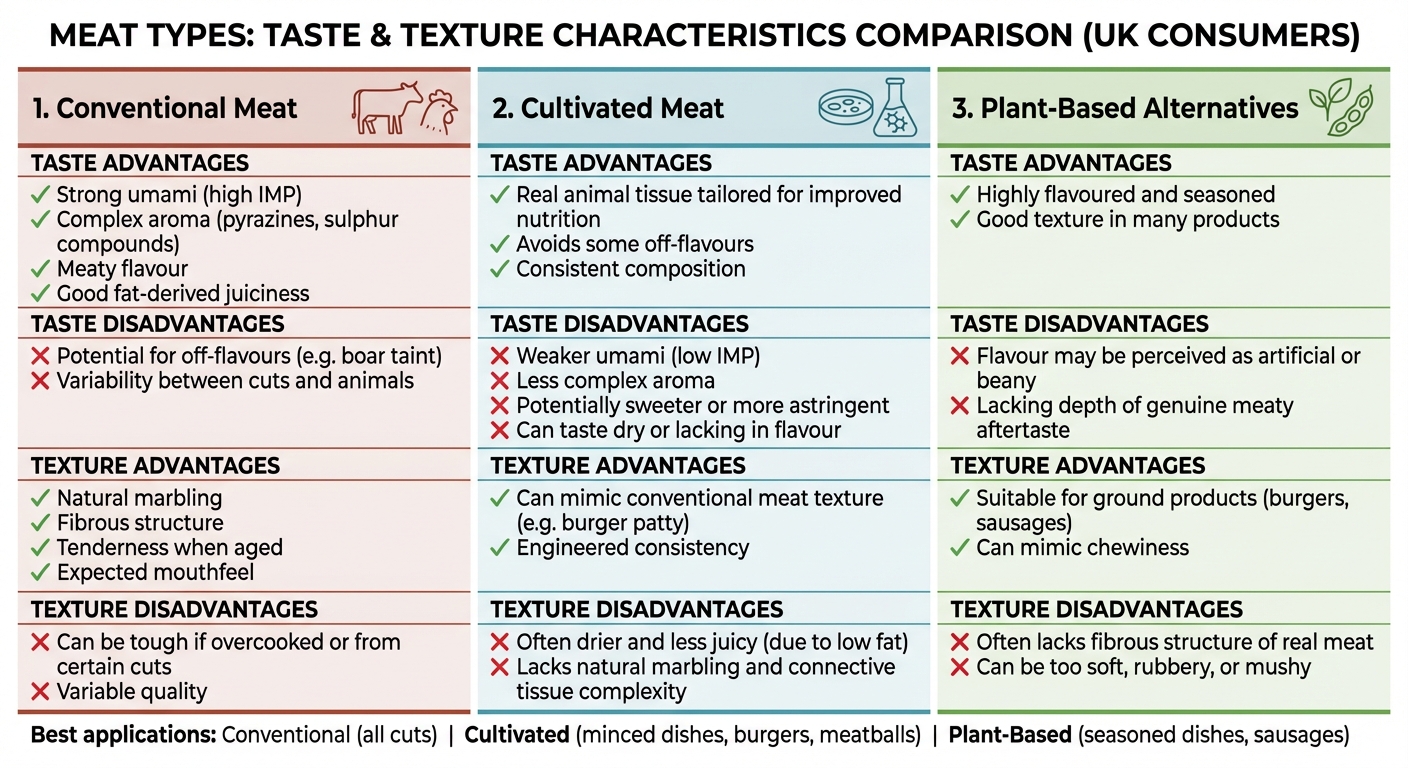
Taste and Texture Comparison: Conventional vs Cultivated vs Plant-Based Meat
1. Cultivated Meat
Taste
Cultivated Meat, grown directly from animal cells, is designed to replicate the flavour of traditional cuts. Its taste comes from key components like amino acids, nucleotides (such as inosine 5′-monophosphate), iron, myoglobin, and fat - elements that give conventional meat its savoury, umami-rich profile. Research so far suggests that while the umami flavour is slightly milder, producers can tweak formulations to enhance it. Interestingly, higher levels of glycine, alanine, serine, and proline in Cultivated Meat add a subtle sweetness to the mix. In one electronic-tongue study comparing cultivated and traditional beef and chicken, the cultivated versions were noted for their "meaty" quality but showed less umami, bitterness, and sourness, alongside a slightly higher astringency.
One of the standout features of Cultivated Meat is its flexibility during production. Manufacturers can adjust factors like culture media, add iron, or co-culture muscle with fat cells to refine aroma and eliminate unwanted flavours, such as boar taint in pork. These adjustments not only shape taste but also influence texture, which remains a key focus for producers. [2][3]
Texture
Recreating the texture of traditional meat is no easy feat, which is why early Cultivated Meat products are leaning towards processed forms like burgers, nuggets, and meatballs rather than whole cuts like steak or lamb chops. Achieving the fibrous structure, connective tissue, and natural marbling of cuts like ribeye or chicken breast is technically complex. Unlike conventional meat, cultivated tissues lack the natural tenderising that occurs post-slaughter, often resulting in textures akin to finely processed burgers that rely on binders, rather than the simplicity of fresh mince made with just meat and salt. For instance, the first cultivated beef burger, unveiled in 2013, had a recognisably meaty taste but was drier due to lower fat content, requiring added binders and flavourings.
To address these challenges, researchers are exploring cutting-edge solutions like edible scaffolds, bioprinting, and co-culture systems that grow muscle, fat, and connective tissue together. These methods aim to better mimic the structure and marbling of whole cuts. Intramuscular fat, in particular, is crucial for delivering juiciness, flavour, and an appealing mouthfeel. Other techniques include controlled maturation, mechanical stimulation of cells, and the use of functional ingredients like phosphates or plant fibres to achieve the firmness, tenderness, and springiness that British consumers expect. By refining these processes, producers hope to replicate the fibrous, marbled textures that define traditional meat dishes in the UK. [3][5][6]
Improving texture is a critical step in meeting the sensory expectations of British consumers.
Consumer Perception
For Cultivated Meat to gain acceptance, it must closely match traditional meat in taste, smell, tenderness, juiciness, and mouthfeel. When marketed as "real meat" that offers the same enjoyment without compromise, consumer interest tends to rise. However, concerns about its perceived unnaturalness or uncertainty around flavour remain. Clear, transparent communication is vital to address these hesitations. Platforms like Cultivated Meat Shop play a helpful role, offering side-by-side comparisons, FAQs, and tasting notes, so consumers know what to expect - whether they're looking for a burger for a barbecue or ingredients for a Sunday roast. Descriptions that compare its taste to familiar favourites, like slow-cooked chicken or a juicy burger, along with endorsements from trusted chefs and food critics, will be essential as these products edge closer to mainstream availability. [4]
Adoption Barriers
For many UK consumers, the ultimate test of Cultivated Meat is whether it delivers the same sensory satisfaction as traditional meat. Concerns that it might taste bland, rely on artificial flavouring, or have undesirable textures - like being rubbery or mushy - are significant hurdles. Additionally, some worry it might resemble plant-based alternatives that haven't always been well-received. To appeal beyond early adopters, brands and retailers should focus on familiar formats and dishes, such as burgers, sausages, nuggets, curries, or stir-fries. Offering product samples, recipe suggestions, and honest descriptions tailored to UK preferences can help build trust and encourage consumers to give Cultivated Meat a try before it appears on supermarket shelves. [3][4][7]
2. Conventional Meat
Taste
The distinct taste of conventional meat comes from a combination of amino acids, nucleotides like inosine 5′-monophosphate, and myoglobin. While raw meat carries a subtle metallic tang, cooking transforms its flavour through the Maillard reaction and fat oxidation, creating the rich, roasted, or grilled aromas we associate with cooked meat[3]. The fat content and marbling play a key role here - as the fat melts, it releases flavour compounds, enhancing juiciness and taste. Cuts like ribeye, with their generous marbling, tend to be more flavourful than leaner options. Interestingly, studies using electronic-tongue technology have shown that conventional meat often scores higher in umami, bitterness, and sourness compared to current Cultivated Meat samples[2]. This complex flavour profile makes conventional meat a tough act to follow.
Texture
The texture of conventional meat is shaped by the structure of its muscle fibres, the distribution of connective tissue, and natural tenderisation processes that occur after slaughter[3]. These factors contribute to the tenderness, juiciness, and overall mouthfeel that consumers expect. Intramuscular fat, or marbling, softens the meat by breaking up muscle fibres, while connective tissues like collagen and elastin add a chewy element. The natural variation between cuts, such as the buttery softness of a ribeye versus the firmer bite of a lean sirloin, adds diversity to traditional British recipes and dining experiences.
Consumer Perception
For many, conventional meat is the gold standard when it comes to taste, texture, and aroma. It has shaped culinary traditions and established sensory benchmarks that people instinctively expect from meat. Consumer feedback in sensory panels often describes conventional meat with terms like "juicy", "tender", "succulent", "meaty", and "savoury"[4]. These consistently positive evaluations underline the challenge for alternatives like Cultivated Meat to meet - or exceed - such expectations to gain widespread acceptance.
Adoption Barriers
While conventional meat generally satisfies sensory expectations, its quality can vary due to factors like the animal's diet, breed, and processing methods. These variations can sometimes result in inconsistent taste or even off-flavours. Additionally, concerns about the health impact of processed meat, such as its high saturated fat content, alongside ethical and environmental issues, are prompting many to explore alternatives like Cultivated Meat[4]. These challenges highlight both the strengths and limitations of conventional meat, setting the stage for innovation in the food industry.
3. Plant-Based Meat Alternatives
Taste
Plant-based meats aim to capture the flavours of traditional meat by leaning on savoury umami notes. Ingredients like yeast extracts, hydrolysed vegetable proteins, and smoke flavourings help recreate that grilled, browned taste. Some products even use soy leghemoglobin to mimic the metallic tang found in conventional meat. The result? A flavour profile that’s often saltier and more heavily seasoned than beef or pork. In the UK, consumer testing shows that products featuring familiar British flavours tend to perform better. That said, some people still pick up on beany or pea-like undertones, especially when the product is eaten on its own without sauces or seasonings. [3][4]
Texture
To replicate the texture of meat, plant-based options rely on high-moisture extrusion techniques using soy, pea, or wheat proteins. This process creates layered textures that work well for processed items like burgers, sausages, and nuggets. However, when it comes to whole cuts - think chicken breasts or steaks - these alternatives often fall short. They struggle to match the fibrousness, juiciness, and marbling of fat that make conventional meat so appealing. UK taste panels have noted that plant-based burgers and mince can feel drier or more uniform compared to traditional meat. For whole cuts, producers are experimenting with materials like mycoprotein fibres and binding gels, but achieving the complex grain and varied chew of real meat remains a hurdle. Some consumers describe the texture as spongy, rubbery, or even mushy in the centre, which can leave a less-than-ideal impression. [3]
Consumer Perception
Across Europe and the UK, surveys consistently show that taste and texture are the top factors influencing whether people will buy plant-based meat again. While seasoned versions often satisfy meat eaters, these products are still frequently rated lower than conventional meat in terms of flavour depth, juiciness, and overall "meatiness", especially when served plain. This is where Cultivated Meat hopes to step in, promising to overcome these sensory limitations while delivering the qualities consumers expect. Unlike plant-based options, Cultivated Meat is grown from real animal cells, which may help it achieve the flavour, mouthfeel, and versatility of traditional meat. Platforms like Cultivated Meat Shop aim to educate consumers about how this new option could bridge the gap, combining sensory satisfaction with environmental benefits. [4][5]
Adoption Barriers
Several challenges stand in the way of wider adoption for plant-based meats. Many people perceive them as bland, overly processed, or having an odd aftertaste. Textural issues - like being dry, crumbly, or rubbery - also make them less appealing compared to traditional meat. Flexitarians and regular meat eaters might use these products in mixed dishes, such as mince in a pasta sauce, but they’re less likely to choose them as the star of the plate, where any sensory shortcomings become more noticeable.
There’s also what some call a "first-bite penalty." If someone’s first experience with a plant-based product is disappointing, they’re unlikely to give it another chance. Long ingredient lists and additives on packaging can further fuel concerns about these foods being overly processed. All of this underscores the importance of Cultivated Meat delivering an excellent first impression. Transparent communication about what early products can and cannot replicate will also be key. Ultimately, taste and texture are the deciding factors for most consumers, shaping the future of alternative proteins. [4]
sbb-itb-c323ed3
Lab-Grown Meat is Here… and I Taste-Tested It!
Advantages and Disadvantages
Let’s take a closer look at the strengths and challenges of conventional meat, cultivated meat, and plant-based alternatives, particularly in the context of what UK consumers value most in their meals.
Conventional meat has long been celebrated for its natural flavour and texture. Its rich umami taste comes from high levels of inosine monophosphate (IMP), combined with natural marbling and a fibrous structure that delivers the mouthfeel people expect. Think of a perfectly grilled steak, a hearty Sunday roast, or a tender chicken breast - these dishes highlight what conventional meat does best. However, it’s not without its drawbacks. Variability between cuts and occasional off-flavours, like boar taint, can be a challenge. Overcooking certain cuts can also result in toughness, which detracts from the eating experience.
Cultivated meat brings a fascinating twist to the table. Made from real animal tissue, it can be customised during production to enhance flavour, texture, and even nutritional value. Producers can fine-tune amino acids to boost umami or create tailored fat marbling, avoiding some of the off-flavours found in traditional meat. Yet, it’s still early days for cultivated meat. Studies using electronic tongues reveal that it currently has lower umami levels and higher astringency compared to conventional meat [2]. Testers have also noted that it can taste dry and less flavourful, with one describing it as "an animal-protein cake" [3][4]. While it can mimic the texture of conventional meat, especially in items like burger patties, its lower fat content and lack of connective tissue complexity often leave it drier and less juicy.
Plant-based alternatives, on the other hand, perform best in seasoned dishes like burgers, sausages, and ready meals. Their ability to incorporate bold spice blends and sauces helps mask differences from real meat. They’re especially appealing to those prioritising ethical or environmental considerations. However, plant-based products often fall short in replicating the nuanced flavour depth of real meat. They lack the meaty aftertaste created by genuine animal metabolites and Maillard reaction products. Texturally, while they work well in ground products, they often miss the fibrous structure and can feel too soft, rubbery, or mushy.
Here’s a quick comparison of how these three categories measure up when it comes to taste and texture:
| Meat Type | Taste Advantages | Taste Disadvantages | Texture Advantages | Texture Disadvantages |
|---|---|---|---|---|
| Conventional Meat | Strong umami (high IMP), complex aroma (e.g. pyrazines, sulphur compounds), meaty flavour, good fat-derived juiciness | Potential for off-flavours (e.g. boar taint), variability between cuts and animals | Natural marbling, fibrous structure, tenderness when aged, expected mouthfeel | Can be tough if overcooked or from certain cuts, variable quality |
| Cultivated Meat | Real animal tissue that can be tailored for improved nutrition and flavour; avoids some off-flavours; consistent composition | Weaker umami (low IMP), less complex aroma, potentially sweeter or more astringent, can taste dry or lacking in flavour | Can mimic conventional meat texture (e.g. burger patty) with engineered consistency | Often drier and less juicy (due to low fat), lacks natural marbling and connective tissue complexity |
| Plant-Based Alternatives | Can be highly flavoured and seasoned; good texture in many products | Flavour may be perceived as artificial or beany, lacking the depth of a genuine meaty aftertaste | Suitable for ground products (e.g. burgers, sausages) and can mimic chewiness | Often lacks the fibrous structure of real meat; can be too soft, rubbery, or mushy |
Cultivated meat shows particular potential for use in minced and mixed dishes - like burgers, meatballs, dumplings, and ready meals. In these applications, sauces and seasonings can enhance its sensory profile, while its authentic animal-cell texture gives it an edge over plant-based options. For UK consumers, these trade-offs offer a glimpse of what the future of dining could look like.
Conclusion
When it comes to taste and texture, cultivated meat occupies an intriguing space. Made from real animal cells, it has a biological edge over plant-based alternatives, which can only attempt to replicate the structure of meat. However, early trials suggest there’s still room to refine its sensory qualities. Initial products have shown differences in flavour complexity and juiciness compared to traditional meat. These findings highlight the need for ongoing advancements, paving the way for the improvements discussed below.
One of cultivated meat’s standout features is its ability to be tailored during production. By adjusting the culture medium, producers can enhance umami-related amino acids, introduce fat and marbling for added juiciness, and fine-tune the overall sensory experience in ways that conventional meat cannot. This flexibility means cultivated meat has the potential to eventually outperform traditional meat in both consistency and quality - a particularly exciting prospect for dishes familiar to UK households.
At present, cultivated meat appears especially suited to minced and mixed dishes like burgers, meatballs, dumplings, and ready meals. In these formats, seasonings and sauces can amplify its flavour, while its authentic animal-cell texture gives it a clear edge over plant-based alternatives. Notably, by December 2025, Michelin-starred chefs began incorporating cultivated meat into their menus - a strong indicator that the technology is making strides in the right direction [1].
Reaching parity with conventional meat will require further breakthroughs in fat integration, flavour enhancement, and production techniques. Yet the foundation is strong: cultivated meat is grown from animal cells and offers the unique advantage of being adaptable by design. As this technology advances, UK consumers can look forward to products that not only rival traditional meat but could redefine what we consider high-quality meat.
For those eager to explore this emerging culinary frontier, Cultivated Meat Shop provides previews, educational resources, and waitlist sign-ups to stay connected with the future of meat.
FAQs
How does the taste and texture of cultivated meat compare to traditional meat?
When it comes to choosing meat, taste and texture are often at the top of the list for consumers. Cultivated meat is crafted to mirror the experience of eating traditional meat, and it does so by using real animal cells. This approach allows it to deliver a flavour profile and mouthfeel that are so close to the real thing, many might find it hard to tell the difference.
With ongoing advancements in the field, producers of cultivated meat are continuously refining these qualities to meet the expectations of even the most devoted meat enthusiasts. Getting the taste and texture just right is crucial for its acceptance as a sustainable and ethical alternative to conventional meat.
How are scientists enhancing the flavour and juiciness of cultivated meat?
Scientists are working hard to perfect the flavour and juiciness of cultivated meat, aiming to make it as close as possible to traditional meat. By mimicking the fat content, muscle structure, and moisture levels found in conventional meat, they’re striving to recreate that satisfying taste and texture people love.
To achieve this, researchers are using advanced methods like fine-tuning cell growth conditions and incorporating plant-based fats or flavour enhancers. These approaches are designed to capture the rich, natural flavours and succulence that consumers expect. The goal? To make cultivated meat a tasty, tempting alternative to its conventional counterpart.
Why is cultivated meat better suited for minced dishes rather than whole cuts at the moment?
Cultivated meat currently works best in dishes like burgers or sausages, where the meat is minced. This is because creating the intricate structure of whole cuts, such as steaks or chicken breasts, poses a bigger technical challenge. Whole cuts need detailed muscle fibres, connective tissues, and fat distribution to replicate the taste and texture of traditional meat - something that's tough to achieve with today's technology.
In contrast, minced products don't depend as much on these structural details, making it easier to deliver a satisfying and realistic experience for consumers. As the science behind cultivated meat progresses, it’s likely we’ll see it branch out into more complex formats, including whole cuts, giving meat enthusiasts even more to choose from.


